
Extending vs Fixed Dining Tables: Which Suits Your Home?
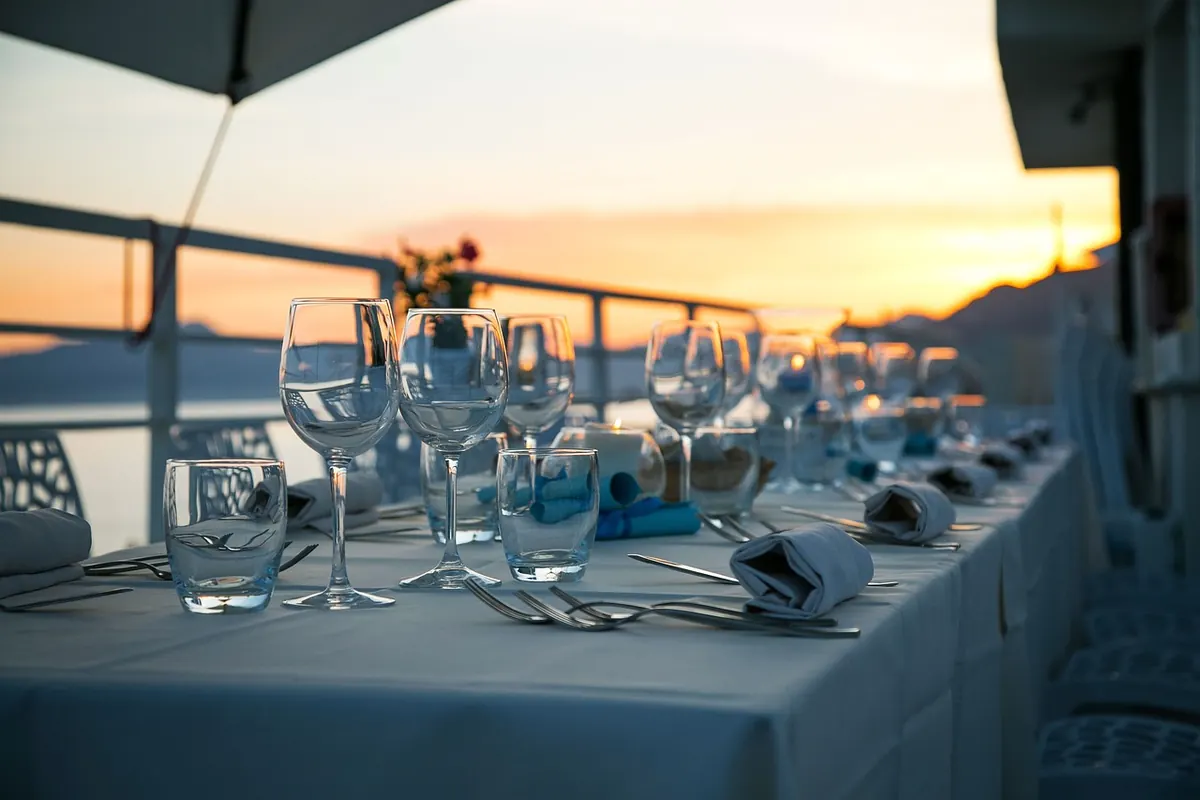
A dining table is one of the few pieces of furniture you buy with a decade of dinners in mind. Most people who end up disappointed with theirs did not buy a bad table — they bought the wrong type of table for the way they live. Fixed versus extending is the clearest example. Neither is better. One asks you to give up floor space permanently; the other asks you to give up a little simplicity. Work out which trade you would rather make and the decision becomes far less agonising.
Start with the room, not the table
A fixed table has one footprint. An extending table has two, and the one that matters is the open position — that is the version you will be sitting around when the table is full.
As a rough rule of thumb, allow around 75–90cm behind each chair so people can push back and stand, and closer to 100–110cm where someone needs to walk behind a seated guest. A table that seats four at 120cm may stretch to 180cm with a leaf, so you are effectively planning for two rooms: one for Tuesday, another for Christmas.
Do not forget the awkward bits: door swings, radiator valves, a sideboard you open weekly, the route from kitchen to table with a hot dish. Before committing, mark the extended footprint on the floor with masking tape. Walking around a taped rectangle for a week tells you more than any showroom does.
Everyday use: the quiet majority of the week
Most households sit two to four people at the table, most days. For that, a fixed table has real advantages: no seams, no hinges, nothing to wobble, and a sturdier feel under elbows and laptops. It simply does its job.
Extending tables answer a different problem. In a flat where the dining area doubles as a workspace, hallway or route to the garden, a table that shrinks to 80cm on a weekday and opens to seat eight at the weekend is genuinely useful. The catch is friction. If opening the table is fiddly, stiff or needs two people, it will stay closed and you will have paid for a feature you never use. Test the mechanism one-handed in the shop. If you cannot manage it while holding a saucepan, that is your answer.
Storage: where do the leaves actually live?
This is the question that catches people out. Extending tables come in two storage styles, and they behave very differently.
- Self-storing. The leaf folds down inside the table, so there is nothing to lose and nothing to find. The trade-offs are weight and a more complex mechanism — usually the part that eventually needs attention.
- Separate leaves. You get a simpler, often more solid table, but you must store one or two large panels somewhere flat, dry and out of the way.
Store leaves flat rather than leaning against a wall, where they can bow over time. Under a bed, on top of a wardrobe or behind a sofa all work. Avoid damp garages and spots directly above radiators — both are unkind to timber and veneer. If the leaves came with a protective bag, keep it. And be honest about the logistics: on a 240cm table, fitting two leaves is a two-person job, so it is not something you will do spontaneously on a Tuesday night.
How often do you really host?
Not the version of you that imagines monthly dinner parties — the actual calendar. Christmas, a birthday or two, a handful of Sunday lunches, a few family visits. Count it.
If you seat six or more five times a year, an extending table earns its keep. If it is closer to fifteen, the argument is settled. If it is genuinely never, a well-made fixed table at the right size gives you more stability, fewer parts and a cleaner look for the money.
There is also a middle ground worth considering. A fixed table that seats six comfortably, with a bench on one side to squeeze in a seventh, handles more occasions than people expect. Combine that with a folding table in a cupboard for the biggest meals and you may never need a mechanism at all.
The main types of extending table
Drop-leaf and gateleg
Hinged flaps fold down either side. Excellent in narrow rooms and small flats, because the closed footprint can be very slim. The compromise is legroom: when the flaps are up, the supports or gatelegs can sit exactly where a guest wants to put their knees.
Butterfly or self-storing
The leaf folds away inside the top. Fast, tidy and nothing to store. Slightly heavier to move and worth checking carefully on a pre-owned buy, since the folding hardware does the hardest work in the design.
Centre-leaf
One or two leaves drop into the middle after the halves slide apart. Usually the most solid-feeling extended table and the best at seating a crowd, but leaves need storing and larger versions need two people.
Draw-leaf and telescopic
The top slides apart and the leaf rises or slides out from underneath. Elegant and often self-storing, with a smooth action when the runners are good — and a grating one when they are not. Always open and close one twice before buying.
Wear, care and the long view
A fixed table has fewer moving parts and therefore fewer things to fail. Protect any timber top from heat and condensation with mats and coasters, keep it out of direct sun where possible, and remember that solid timber can be sanded back and refinished, while veneer needs a gentler hand.
With an extending table, the mechanism is the whole story. Keep runners free of crumbs and grit with a dry brush or a vacuum on a low setting. Lift the halves rather than dragging them. If a leaf catches, stop and check alignment instead of forcing it, and tighten any screws or bolts once a year. A little wax or a silicone-free lubricant, used sparingly according to the maker's guidance, keeps things moving. Second-hand extending tables can be excellent value — provided you operate the mechanism yourself before parting with any money.
Making the choice
Answer these five questions honestly and the decision usually makes itself:
- How many people sit at the table on a normal weeknight?
- How many times a year do you seat six or more?
- Does the extended size fit, including chairs, door swings and walking space?
- Where would the leaves live, and is that spot flat and dry?
- Will you genuinely open it, or leave it extended and lose the benefit?
If your everyday number is small and hosting is rare, buy a fixed table that fits the room properly and add a bench or a folding table for occasions. If floor space is tight most of the time but you host a few times a year, an extending table is money well spent. If you host often, choose one with a solid centre-leaf or draw-leaf mechanism and accept that it will live open more than closed.
Buy for the dinners you actually host, in the room you actually have. Everything else is just a photograph in a catalogue.
Photo: JoelFazhari / Pixabay