
Bedroom Storage Checklist: Beds, Bedside Tables and Beyond
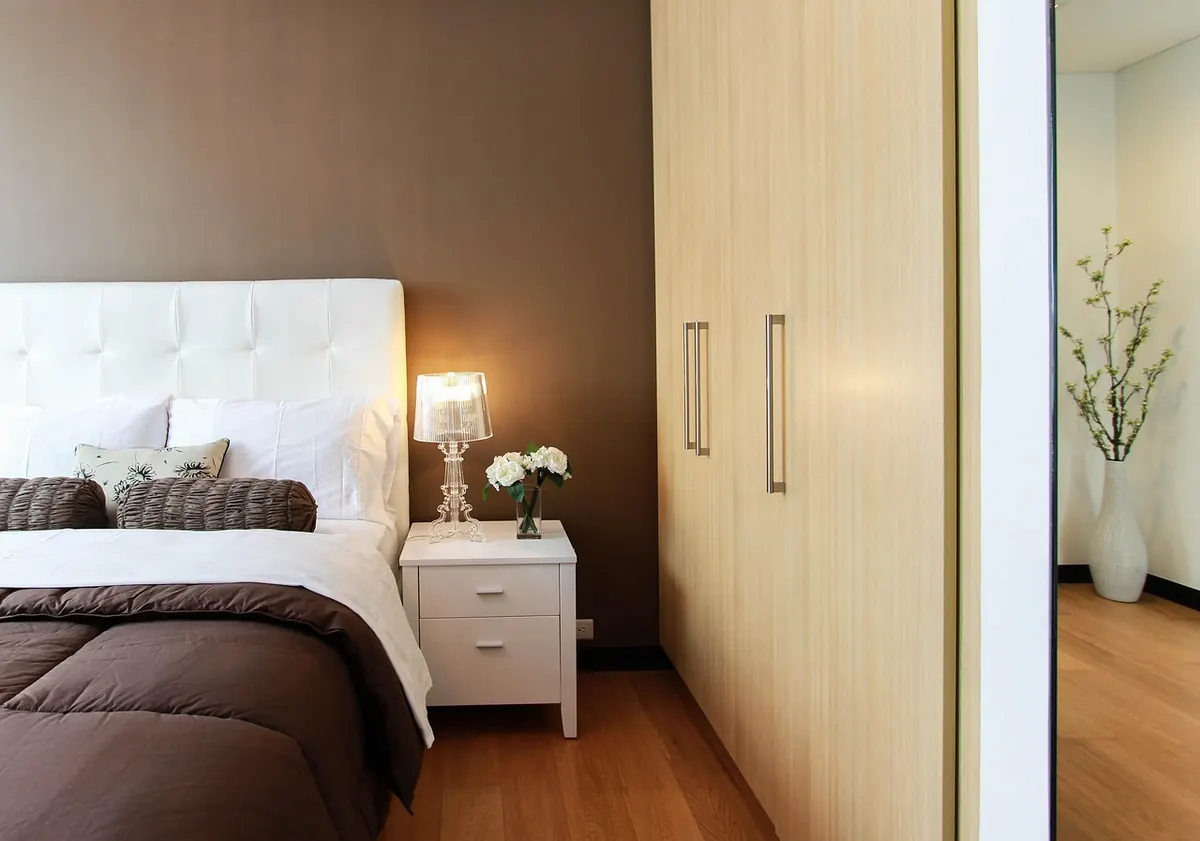
A tidy bedroom is rarely the work of a naturally organised person. It is the result of every item having somewhere to go at the end of the day: a drawer for the chargers, a rail for the shirts, a basket for the jeans you will wear again tomorrow. When those places do not exist, the floor becomes the storage. The fix begins before you buy anything — work out what you own, where it currently lands, and which piece of furniture can take the weight.
Start With the Bed, Because It's the Biggest Piece
Under-bed space is the largest single storage volume in most bedrooms, and it is almost always wasted. Before you look at wardrobes, decide what could live under the bed: spare bedding, suitcases, off-season coats, the box of cables you cannot quite bring yourself to sort. If a new bed is on the cards, this is the moment to choose one that earns its footprint.
An ottoman bed lifts the entire base on gas struts, giving you one large, uninterrupted space. A divan with drawers gives you two or four shallower compartments, but it only opens from one side — so if one side of the bed sits against a wall, think carefully about which drawers you will actually be able to reach. Both need clearance. Check there is room at the foot or side for the base to lift, and be honest about the weight of the mattress you will be raising every time you change the bedding.
If you already have a frame on legs, measure the gap between the floor and the underside before buying a single box. Shallow lidded boxes work well because you can pull one out without disturbing the rest. One deep container that has to be emptied to reach anything is just a bigger pile.
A headboard with built-in shelves, or a bed with storage in the foot end, can absorb books, a lamp and a glass of water without using any floor space. In a small room, that trade is usually worth making.
Bedside Tables: The Smallest Surface Does the Most Work
A bedside table has two jobs: hold what you need within arm's reach, and hide what you would rather not look at. A single drawer is usually enough to swallow the chargers, the spare hair bands and the paperback you have quietly abandoned.
Think about what genuinely lands there each night:
- A lamp, ideally with a compact base so it doesn't dominate the top
- The book or e-reader you are currently reading
- Glasses and their case
- Your phone and a charging cable
- A glass of water, on a coaster if the surface is wood
- Tissues, and any medication you take in the evening — kept safely out of reach of children and pets
That is a lot to ask of a small surface, which is why the drawer matters more than the design. If floor space is tight, a wall-mounted shelf at mattress height or a slim table around 30 cm wide will do the same job. A lower shelf, rather than a second drawer, is useful for the things you want visible but not on top.
Wardrobes: Plan by Category, Not by Guesswork
Most wardrobe mistakes come from buying the wrong internal layout. Before you choose anything, empty your current storage and count roughly what you own in each group: long hanging such as dresses and coats, short hanging such as shirts and jackets, folded items such as jumpers and jeans, and small things such as underwear, socks and accessories.
The results tend to surprise people. If you own three coats and forty T-shirts, a wardrobe that is mostly long hanging will sit half empty while the pile on the chair keeps growing. Measure your longest garment — run a tape from the rail down to the hem — and let that decide how much long hanging you need.
Shirts and jackets can usually be doubled up on two rails, which is the most effective way to fit more into the same carcass. Then think vertically. Floor-to-ceiling wardrobes use the space a standard unit leaves above it, and if that is out of reach, lidded boxes on top of the wardrobe are fine for luggage and seasonal clothing, provided you label them clearly. Inside, pull-out baskets, drawer dividers and shelf risers cost very little and stop folded stacks collapsing into each other.
The Awkward Spots That Are Always Missed
Above eye level
The space above a wardrobe, above a door or over a window is easy to forget because you never see it. Keep it for the things you need twice a year, not the things you need twice a week.
Behind the door
Hooks on the back of the door take dressing gowns, bags and tomorrow's outfit. They cost almost nothing and remove three items from the floor permanently.
Corners and gaps
The narrow gap beside a wardrobe, the alcove next to a chimney breast, the strip under a window sill — these are where a slim shelving unit or a tower of baskets fits perfectly. Measure before you assume nothing will go there.
What to Do With Clothes You'll Wear Again
The chair in the corner is not really a storage problem. It is a missing category. Clothes that are too clean for the wash but not clean enough for the wardrobe need a designated spot: a row of hooks on the wall, a valet stand, or a lidded basket that hides the contents. Give them somewhere to go and the chair goes back to being a chair.
Books, paperwork and charging cables colonise flat surfaces in much the same way. One shelf, one document box and one tray for cables will contain most of it. Open shelving looks lovely when it is styled and chaotic when it is not, so if you are not a natural tidier, choose baskets and closed doors over display.
A Checklist to Work Through Before You Buy
- Walk the room at night and note where things actually pile up — that tells you which category is missing a home.
- Empty your current storage and count your belongings by type, not by how they are stored now.
- Measure the room, including ceiling height, skirting boards, radiator positions and plug sockets.
- Measure the route in: doorway widths, stair turns and hallway corners decide what will physically fit through.
- Decide on your priority. If clothes are the problem, sort the wardrobe first; if it is clutter, the bed and bedside storage will do more work.
- Check access on every piece — which side drawers open, how far a door swings, whether an ottoman can be lifted.
- Buy the largest item first, then fill the remaining gaps with smaller pieces that fit the space left over.
Buy the Big Pieces First, Then Fill the Gaps
Storage bought in the right order looks deliberate; storage bought piecemeal looks like a collection of containers. Start with the bed, because it holds the most and sets the rest of the room's proportions. Add the wardrobe next, then the bedside tables, and only then reach for baskets, boxes and hooks to solve whatever is still without a home.
If that leaves a gap you cannot fill, live with it for a fortnight before buying something to fill the space. A clear stretch of floor is storage too — it is the room's breathing space, and it is worth keeping.
Photo: Pexels / Pixabay